
-
Helping your child learn chess at home does not have to be complicated. You do not need to be a chess expert, memorize advanced openings, or understand every tournament rule. For most children, the best way to start is simple: learn the basics, practice a little at a time, play in a fun environment, and build confidence one move at a time.
Chess gives kids a chance to practice thinking ahead, solving problems, concentrating, and learning from mistakes. It can also be a fun activity for families to enjoy together while giving children a challenging game they can continue improving at over time.
At Kid Chess, we believe learning chess should be fun, approachable, and encouraging for children. Whether your child is completely new to chess or already knows how the pieces move, there are plenty of simple ways to help them learn and practice at home.
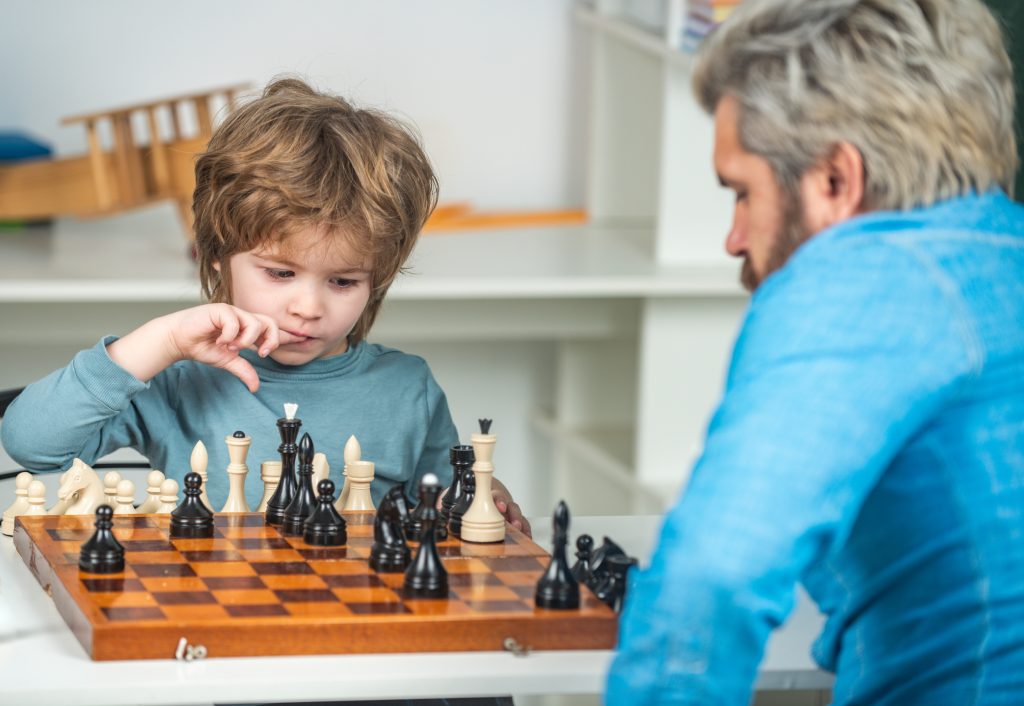
How to Help Your Child Learn Chess at Home
- You do not need to be a chess expert to help your child learn.
- Start with piece names, chessboard setup, piece movement, check, and checkmate.
- Keep practice short, positive, and focused on one skill at a time.
- Use puzzles and practice games to help kids think before they move.
- A chess app designed for kids can provide guided lessons and practice between games or classes.
- Focus on progress and enjoyment rather than winning every game.
Learning Chess at Home Does Not Have to Be Complicated
Many parents like the idea of helping their child learn chess but worry that they are not qualified to teach it. Your child does not need an expert chess coach at home. They need encouragement, consistency, and opportunities to practice in a positive environment.
Your role does not have to be explaining advanced strategy. You might set up the board together, watch a short lesson, solve a puzzle, play a relaxed game, or simply ask your child to explain what they are thinking.
Children are much more likely to stay interested when learning chess feels like a game instead of a test.
Start With the Chess Basics
Before children can think about tactics and strategy, they need to understand the basic rules of chess. Building that foundation makes the rest of the game much easier to understand.
Start with:
- The names of the chess pieces
- How to set up the chessboard
- How each piece moves
- How pieces capture
- What check means
- What checkmate means
- How players take turns
If your child is still learning the fundamentals, visit the Kid Chess Learn Chess section for beginner-friendly lessons and practice resources.
Review the Chess Pieces
Make sure your child can identify the six types of chess pieces:
- King
- Queen
- Rook
- Bishop
- Knight
- Pawn
Knowing the names of the pieces makes later instruction much easier. When someone says, “Move your bishop” or “Protect your queen,” your child can focus on the chess idea instead of trying to remember which piece is being discussed.
Practice How Each Chess Piece Moves
Once your child knows the names of the pieces, practice how each one moves. You do not need to play a complete game. Place one piece on the board and ask your child to show all the squares it can move to.
The knight and pawn can be especially confusing for beginners. Knights move in an L shape and can jump over other pieces. Pawns move forward but capture diagonally.
Kid Chess has step-by-step guides for setting up the chessboard, how the knight moves, how castling works, and pawn promotion.
Keep Chess Practice Short and Fun
One of the best ways to help kids learn chess at home is to keep practice manageable. Short, regular sessions are often easier for children to enjoy than long lessons that begin to feel like schoolwork.
A good starting point is about 10 to 15 minutes at a time. That might include setting up the board, reviewing one piece, solving a few puzzles, watching a short lesson, or playing part of a game.
The goal is not to teach everything at once. The goal is to help your child become more comfortable with chess over time.
Practice One Chess Skill at a Time
Instead of trying to teach the entire game in one sitting, focus on one small skill. One day you might practice how bishops move. Another day you might work on knights. Later, you can combine pieces and begin playing simplified games.
Small lessons give children more opportunities to experience success and can make learning feel less overwhelming.
Celebrate Progress
Chess can be difficult, especially for beginners. Notice when your child remembers a rule, finds a good move, solves a puzzle, or shows good sportsmanship.
Encouragement helps children see chess as something they can improve at through practice rather than something they are expected to understand immediately.
Use a Chess App for Kids for Guided Practice
A guided chess app can make learning at home much easier, especially when parents do not want to create every lesson themselves. The Kid Chess App is a chess learning app designed for kids that gives children a structured way to learn, practice, and play.
Children can work through beginner-friendly chess lessons, watch instructional videos, solve puzzles, complete activities, play against character opponents, and continue practicing between Kid Chess clubs, camps, or lessons.
The Kid Chess App can be helpful for:
- Children learning chess for the first time
- Beginners who need more practice with the fundamentals
- Kids who want to practice between chess classes or club meetings
- Students preparing for a Kid Chess camp or program
- Families looking for an educational way to use screen time
Kids can use the app in a desktop web browser or download it for iPhone, iPad, or Android. If your child enjoys learning with interactive activities, the Kid Chess App for kids can become part of a simple at-home chess routine.
Play Chess Games Together
Playing chess together is one of the simplest ways to help your child improve. You do not need to play perfectly. A relaxed game with a parent can sometimes be much less intimidating than a competitive game.
As you play, encourage your child to explain what they are thinking. Ask simple questions such as:
- Is your king safe?
- Is one of your pieces being attacked?
- What might your opponent do next?
- Can you protect that piece?
- What could happen after you make that move?
These questions encourage children to slow down and look at more of the board before moving.
Use Chess Puzzles to Build Confidence
Chess puzzles are useful because children can practice one position or idea without having to play an entire game. A puzzle asks the player to study a position and find a strong move.
Chess puzzles can help kids practice:
- Pattern recognition
- Concentration
- Problem-solving
- Checkmate awareness
- Patience
- Thinking before moving
For beginners, start with simple puzzles and gradually increase the difficulty. Kid Chess has chess puzzles for kids that can be used for practice at home.
Teach Kids to Look First, Move Later
One of the most important chess habits for beginners is learning to pause before making a move. Children often see an exciting move, such as capturing a piece, and play it immediately without checking what else is happening on the board.
A simple phrase parents can use is: “Look first, move later.”
Before moving, encourage your child to ask:
- Is my king safe?
- Is one of my pieces being attacked?
- Am I leaving anything unprotected?
- Does my opponent have a threat?
- What might happen after my move?
Kid Chess has a full Look First, Move Later lesson that helps children practice this habit.
Help Your Child Learn From Chess Mistakes
Every chess player makes mistakes. For children, learning how to respond to those mistakes can be just as important as learning the rules of the game.
After a mistake or a loss, try asking:
- What did you notice after that move?
- Was there another move you could have tried?
- What would you do differently next time?
- What did you learn from that game?
This keeps the conversation focused on learning instead of simply winning or losing.
Do Parents Need to Know Chess?
No. Parents do not need to be strong chess players to help their children learn chess at home.
If you are new to the game, you can learn alongside your child. Set up the board together, watch beginner lessons, try simple puzzles, play short games, and ask your child to explain what they have learned.
Many children actually enjoy becoming the teacher and showing a parent how a chess idea works.
Consider Chess Clubs, Camps, and Lessons
At-home chess practice is valuable, but many children also benefit from playing and learning with other kids. Structured chess programs give children opportunities to face different opponents, ask questions, learn from instructors, and enjoy friendly competition.
You can explore Kid Chess programs, including after-school chess clubs, camps, school programs, private lessons, tournaments, and other learning opportunities. Current after-school programs and registration information are available on the Kid Chess program schedule. :chatgpt-content-reference{index=”2″}
How to Build a Simple At-Home Chess Routine
You do not need to practice chess every day or spend hours at the board. A simple routine can make it easier for children to practice consistently without becoming overwhelmed.
For example:
- Day 1: Review one chess piece and how it moves.
- Day 2: Solve a few beginner chess puzzles.
- Day 3: Play a short game together.
- Day 4: Use the Kid Chess App for guided lessons or practice.
- Day 5: Talk about one thing your child learned during the week.
This gives children several different ways to practice while keeping each session manageable.
Keep the Focus on Fun and Improvement
Winning is exciting, but it should not be the only measure of success when a child is learning chess. Kids can also make progress by recognizing threats, thinking before they move, remembering rules, solving puzzles, and learning from mistakes.
Praise the thinking process as well as the result. For example:
- “I like how you stopped to think before moving.”
- “That was a good idea, even though it did not work this time.”
- “You noticed your king was in danger.”
- “You learned something from that game.”
Frequently Asked Questions About Helping Kids Learn Chess at Home
What age should a child start learning chess?
Children can begin learning basic chess concepts when they are interested and comfortable following simple rules. Start with piece names, how the pieces move, and short activities rather than trying to teach an entire game at once.
Do parents need to know chess to help their child?
No. Parents can learn alongside their children, use beginner chess resources, solve puzzles together, and use a guided chess app for kids for additional practice.
How often should kids practice chess at home?
Short, regular practice sessions can work well for beginners. Around 10 to 15 minutes a few times per week is a reasonable starting point, but the right amount depends on your child’s interest and attention span.
What should kids learn first in chess?
Start with the names of the pieces, how the chessboard is set up, how each piece moves, how capturing works, and the meaning of check and checkmate. Once those basics are comfortable, children can begin learning simple tactics and strategy.
Are chess puzzles good for beginners?
Yes. Beginner chess puzzles can help children practice looking carefully at the board, recognizing patterns, and finding good moves without playing a full game.
Is a chess app helpful for kids?
It can be. A good chess app for kids should make the game understandable, give children opportunities to practice, and provide instruction appropriate for beginners. The Kid Chess App includes guided lessons, videos, puzzles, activities, and games designed to help children learn and practice chess.
Can kids learn chess without a parent who knows how to play?
Yes. Parents can provide encouragement and structure while children use beginner lessons, puzzles, chess programs, and guided learning tools. Parents can also learn the basics alongside their child.
Help Your Child Learn Chess at Home with Kid Chess
Helping your child learn chess at home can be simple and enjoyable. Start with the fundamentals, keep practice short, use puzzles and games, and encourage your child to think through each move instead of worrying only about winning.
For guided at-home practice, explore the Kid Chess App. You can also visit the Kid Chess Learn Chess resources, try chess puzzles for kids, or explore Kid Chess clubs, camps, lessons, and other programs.
If you have questions about Kid Chess, visit the contact page or view the current program schedule.
-
Chess teaches foresight, by having to plan ahead; vigilance, by having to keep watch over the whole chess board; caution, by having to restrain ourselves from making hasty moves; and finally, we learn from chess the greatest maxim in life – that even when everything seems to be going badly for us we should not lose heart, but always hoping for a change for the better, steadfastly continue searching for the solutions to our problems.
-
Register for Our Classes!