
-
Summer break is something most kids look forward to all year long. It is a chance to relax, spend time with friends, and enjoy a break from homework and busy school schedules. For parents, though, summer can also bring an important question:
How do you keep kids active, engaged, and learning while school is out?
That is one reason educational summer camps continue to grow in popularity. Parents want activities that are not only fun, but also meaningful. Chess summer camps offer a unique combination of learning, creativity, social interaction, and entertainment that can benefit children long after summer ends.
Unlike many activities that are purely recreational, chess encourages kids to think ahead, solve problems, stay focused, and make decisions independently. At the same time, chess camps are still designed to be enjoyable, social, and exciting for children of many ages and skill levels.
For families looking for productive and engaging summer activities, chess camps can be an excellent option.
If you are interested in seasonal chess programs and camp schedules, you can explore the current summer offerings available through the Kid Chess seasonal camps page.
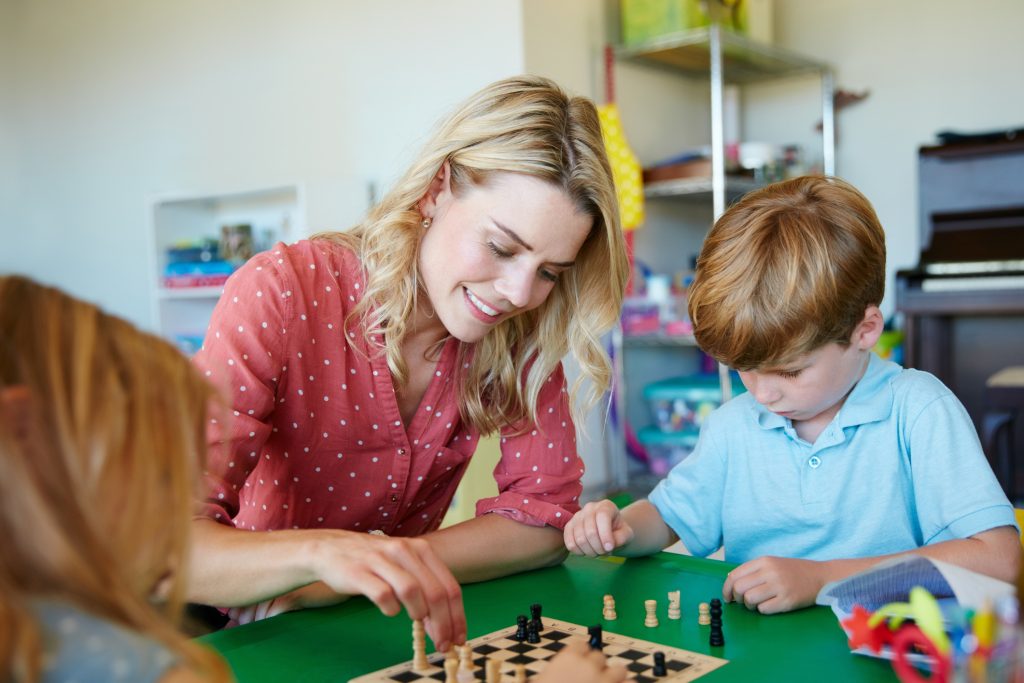
Chess instructor teaching children how to play chess at Summer Camp
Chess Keeps Kids Mentally Active During Summer Break
One challenge many families face during summer is helping children stay mentally engaged while school is out. Teachers and parents often talk about “summer learning loss,” where students may lose some academic momentum during long breaks away from structured learning.
Chess offers a fun way to help keep young minds active.
Every chess game encourages children to:
- Think critically
- Plan ahead
- Analyze situations
- Solve problems
- Learn from mistakes
- Develop patience
Unlike passive entertainment, chess requires participation and concentration. Kids are constantly making decisions and evaluating outcomes. Even beginner players begin developing important strategic thinking skills after only a short amount of instruction and practice.
This is one reason many parents view chess camps as both an educational and enriching summer activity.
Chess Helps Kids Build Confidence
One of the most rewarding parts of learning chess is seeing progress happen in real time.
Children quickly begin noticing improvement:
- recognizing patterns,
- avoiding mistakes,
- solving puzzles faster,
- and winning games they previously would have lost.
These small victories can have a surprisingly positive effect on confidence.
Chess also teaches kids that improvement comes through practice and persistence. Even losses become valuable learning experiences. Over time, children learn how to stay positive, adapt, and continue improving after setbacks.
That type of confidence often extends beyond the chess board and into school, sports, and everyday life.
Many parents appreciate that chess encourages children to think independently and trust their own decisions rather than simply following directions from others.
Chess Encourages Focus and Patience
Modern kids are surrounded by distractions. Phones, tablets, streaming videos, and fast-paced entertainment can make it difficult for children to practice concentration and patience.
Chess naturally slows things down.
Players must carefully consider:
- possible moves,
- future consequences,
- defensive strategies,
- and opportunities several turns ahead.
Kids quickly learn that rushing often leads to mistakes. Successful players become more thoughtful, patient, and observant over time.
Many families appreciate how chess encourages children to focus on one task at a time and think carefully before acting. These habits can become helpful in both academic and social situations.
Chess Summer Camps Combine Learning With Fun
One misconception some people have is that chess camps are overly serious or rigid. In reality, most youth chess camps are designed to be energetic, social, and enjoyable.
Kids are not simply sitting silently at chess boards all day long.
Many camps include:
- friendly tournaments,
- team activities,
- puzzle challenges,
- group instruction,
- strategy games,
- and opportunities to make new friends.
The combination of learning and fun is part of what makes chess camps so effective. Kids stay engaged because they are actively participating instead of passively watching or listening.
For many children, chess camp becomes one of the highlights of summer because it allows them to compete, improve, and socialize in a positive environment.
Chess Teaches Problem-Solving Skills
Every chess game presents a new challenge.
Players must constantly evaluate:
- what their opponent is trying to do,
- what threats exist,
- and what opportunities are available.
This develops problem-solving skills in a very natural way.
Unlike worksheets or memorization exercises, chess teaches kids how to think through situations independently. They learn how to:
- analyze patterns,
- weigh options,
- adapt strategies,
- and make decisions under pressure.
These types of critical thinking skills can benefit children in many areas of life, including academics, sports, and future careers.
Chess rewards creativity and logical thinking at the same time, which is part of what makes it such a powerful educational activity.
Chess Camps Welcome Beginners and Experienced Players
Some parents hesitate to register their child for chess camp because they worry their child has little or no chess experience.
Fortunately, many chess camps are beginner friendly.
New players often start by learning:
- how the pieces move,
- basic checkmates,
- opening principles,
- and simple tactics.
Children are usually grouped by experience or skill level so beginners do not feel overwhelmed.
At the same time, more experienced players can continue improving through:
- advanced strategy lessons,
- tournament preparation,
- puzzles,
- and competitive play.
This flexibility makes chess camps accessible to a wide range of children.
Whether a child is learning the game for the first time or already enjoys tournament chess, camps can provide an engaging environment for continued growth.
Chess Encourages Social Interaction
Although chess is often viewed as an individual game, chess camps are highly social environments.
Children interact constantly through:
- games,
- group instruction,
- team competitions,
- and shared learning experiences.
Many kids enjoy meeting others who share similar interests and enthusiasm for the game.
For some children, chess provides a comfortable social environment where they can build friendships and confidence while participating in structured activities.
The positive atmosphere at many camps helps children develop sportsmanship, communication skills, and respect for others.
Educational Summer Camps Continue to Grow in Popularity
Parents today are increasingly looking for summer activities that offer more than simple entertainment.
Educational summer camps have become especially popular because they combine:
- structure,
- learning,
- creativity,
- and social interaction.
Chess fits naturally into this category.
Unlike activities that revolve entirely around screens or passive entertainment, chess keeps children mentally engaged while still allowing them to have fun and interact with peers.
Many families also appreciate that chess can complement academic learning by encouraging:
- concentration,
- logic,
- planning,
- and disciplined thinking.
For families in the Metro Atlanta area, including Marietta and Roswell, chess summer camps can offer a productive and enjoyable option during school breaks.
What Kids Typically Learn at Chess Camp
Every program is different, but many chess summer camps include instruction and activities such as:
- Chess fundamentals
- Piece movement and board setup
- Opening principles
- Tactical combinations
- Checkmate patterns
- Chess puzzles
- Tournament etiquette
- Time management
- Strategic planning
- Sportsmanship
- Competitive play
- Endgame basics
Kids often improve rapidly because they are immersed in the game for several hours each day in an encouraging environment.
Many camps also include opportunities for students to play games against a variety of opponents, helping them gain experience and confidence.
How to Choose the Right Chess Summer Camp
Not every camp experience is exactly the same, so parents often benefit from considering a few important factors before registering.
Some things to look for include:
- Beginner-friendly instruction
- Experienced coaches and staff
- Positive and encouraging environment
- Balanced mix of learning and fun
- Age-appropriate groups
- Convenient locations and schedules
- Opportunities for both casual and competitive players
The best camps help children feel challenged without becoming overwhelmed.
Parents should also look for programs that emphasize sportsmanship, creativity, and personal growth rather than focusing only on competition.
Why Chess Is One of the Best Summer Activities for Kids
Chess is unique because it combines education, strategy, creativity, and social interaction into one activity.
Kids are constantly learning while still having fun.
They develop skills that can benefit them long after summer ends, including:
- patience,
- focus,
- confidence,
- problem-solving,
- and critical thinking.
At the same time, they enjoy friendly competition, make new friends, and experience the excitement of improving their game.
For many families, chess camps offer the perfect balance between summer fun and meaningful enrichment.
Families interested in learning more about schedules, locations, and current camp offerings can visit the Kid Chess seasonal camps page to explore available programs.
A Look at Chess Camp in Atlanta
Frequently Asked Questions About Chess Summer Camps
What age is best for chess camp?
Many chess camps welcome elementary and middle school students, though age ranges vary by program. Some camps are designed specifically for younger beginners, while others include advanced instruction for experienced players.
Does my child need chess experience?
Not necessarily. Many camps are beginner friendly and teach the fundamentals of chess to new players.
Are chess camps educational?
Yes. Chess camps encourage critical thinking, concentration, strategic planning, and problem-solving while still creating a fun and engaging environment for kids.
What should kids bring to chess camp?
Requirements vary, but many camps recommend bringing lunch, snacks, water, and comfortable clothing. Most programs will provide chess sets and materials.
Do chess camps help with confidence and focus?
Many parents notice improvements in patience, confidence, and focus as children continue learning and practicing chess over time.
Are chess camps only for competitive players?
No. Many camps welcome both casual and competitive players. Some children attend simply because they enjoy learning and playing the game.
The sitemap you attached also shows several older instructional and learning-related pages already on the domain, including chess lessons, puzzles, and educational resources, which can create strong internal linking opportunities for this new content.
-
Chess teaches foresight, by having to plan ahead; vigilance, by having to keep watch over the whole chess board; caution, by having to restrain ourselves from making hasty moves; and finally, we learn from chess the greatest maxim in life – that even when everything seems to be going badly for us we should not lose heart, but always hoping for a change for the better, steadfastly continue searching for the solutions to our problems.
-
Register for Our Classes!